When Ashley Munroe set up her account on Nextdoor, the social app popular with neighbors, a year or so ago, the geography was reassuringly familiar. There was North Lincoln Park. There was South Lincoln Park. There was no ‘Mercy’.
Returning to the map recently, she found that ‘Mercy’ had apparently arrived without introducing itself. South Lincoln Park remained in her page heading, but its name had disappeared from the accompanying map. ‘Mercy’ enjoyed prominent placement in a part of Chicago previously understood by its occupants, their real-estate agents and their monogrammed tote bags to be Lincoln Park.
“I know where I live,” Ashley said. “I’m less certain the map does.”
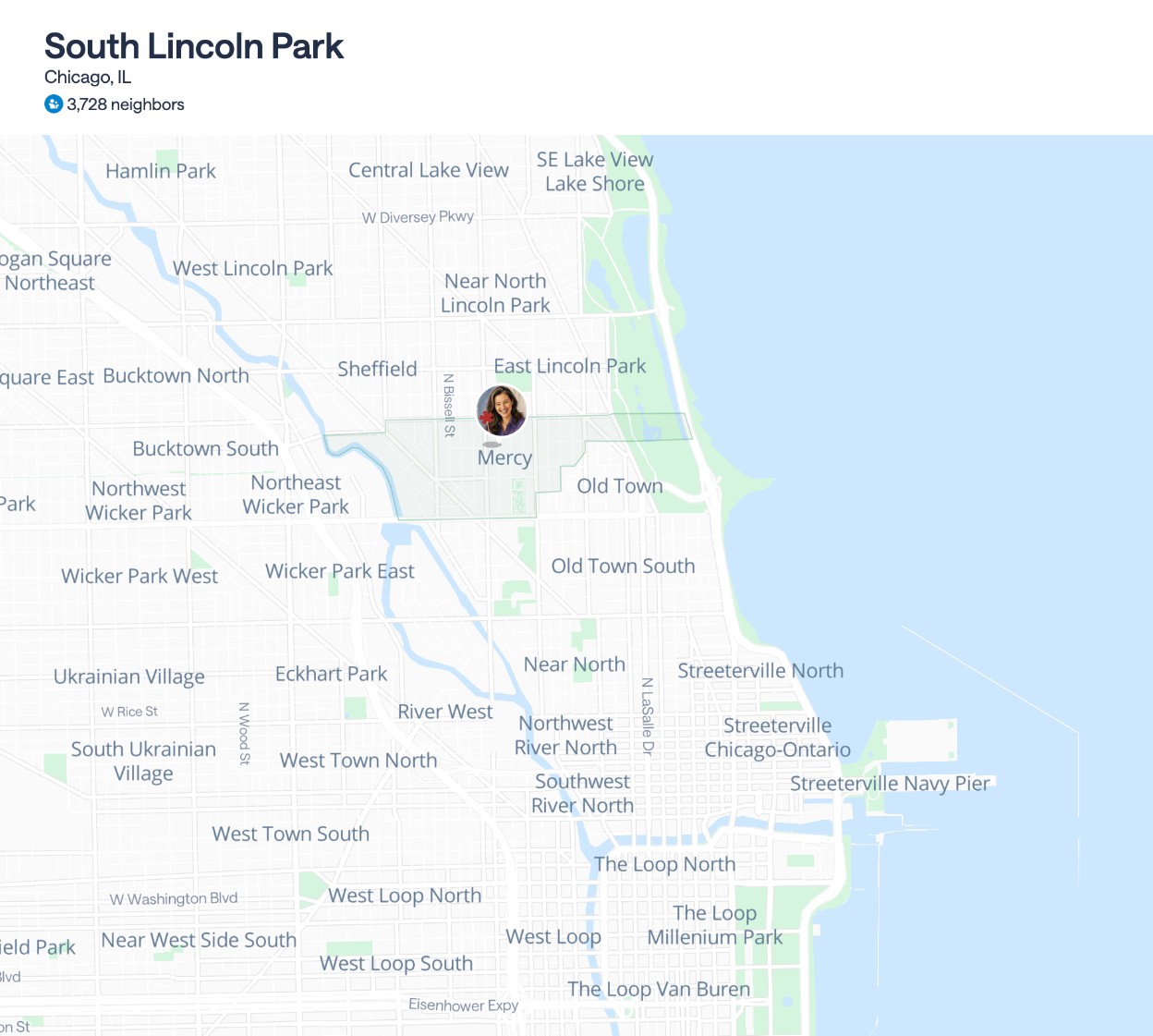
She began making discreet inquiries over coffee. The inquiries continued at barre, then through lunches, dinners, sidewalk cafés and the East Bank Club. Nobody knew anyone who lived in ‘Mercy’. Nobody had been invited to anything in ‘Mercy’. Nobody could explain how an entire neighborhood had appeared without at least one person mentioning the parking.
There were no known shoppes or boutiques identifying themselves as ‘Mercy’. Not even a singular Starbucks anyone could name. For the Society, this was less a neighborhood than a failure of basic infrastructure.
The only ‘Mercy’ anyone could place was Mercy Hospital & Medical Center on the South Side (now Insight). That ‘Mercy’ had a building. It had a sign. It even had valet parking, which briefly improved the mood at lunch. Nobody could account for its apparent expansion into a residential identity north of North Avenue.
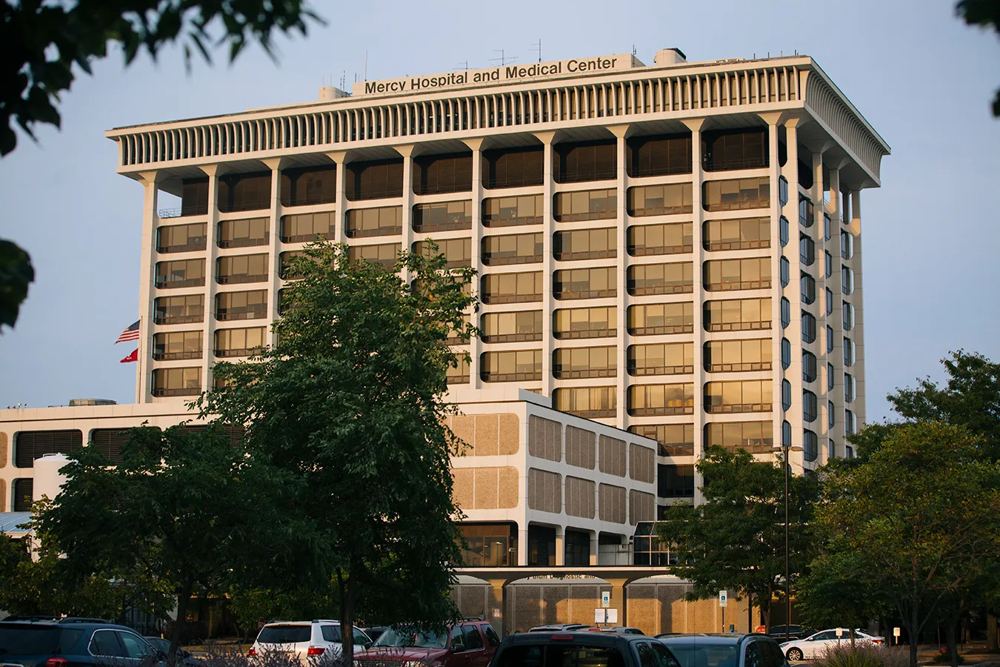
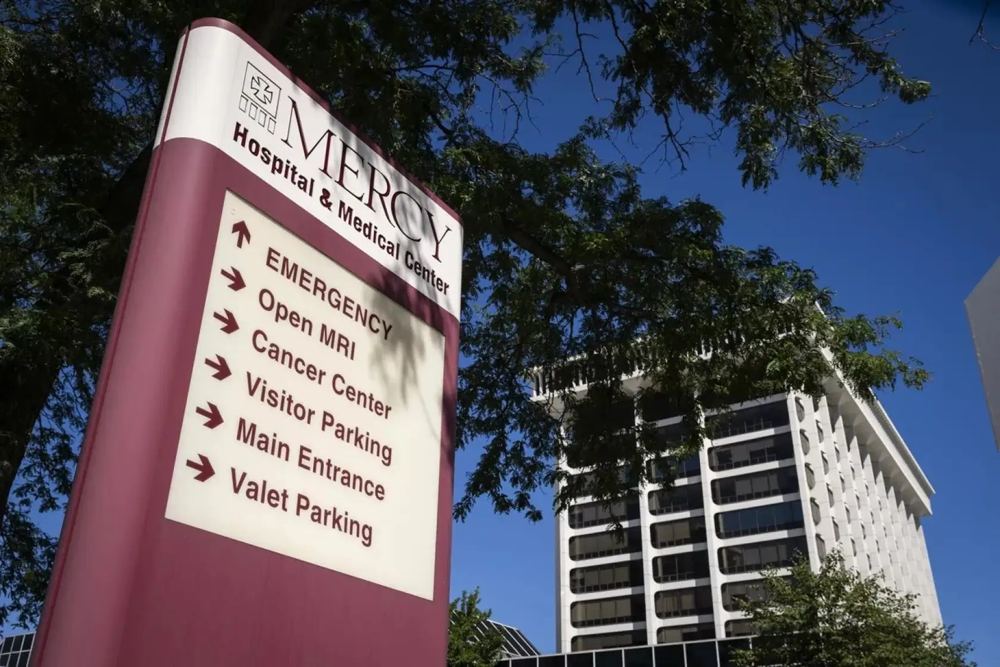
Ashley studied the hospital photographs. The arrows were clear. The building had corners. If this ‘Mercy’ could make itself understood, why was the one on Nextdoor behaving like a spilled drink?
The name was only the beginning.
Clicking ‘Mercy’ revealed the more serious problem: its shape. A pale green outline spread across the map as though a spiderweb had crashed into Lincoln Park and attached itself to whatever it could reach. Curves fed into curves. Deep scoops narrowed to little points, then opened into broad chambers. It looked like a city ward map on funky steroids.
This was an ambitious treatment for a neighborhood where people can detect a planter six inches out of alignment. The street grid continued calmly underneath, apparently declining to participate.
Near Fullerton, the web developed dangling pockets. Farther east, it stretched toward the lake. One expected to find a small, exhausted real-estate agent wrapped in silk near Halsted.
The outline took in almost all of Goose Island, but not all. One portion appeared to have failed the admissions process. The web made little detours around pieces of the island, then continued south as though those exclusions were perfectly self-explanatory. The Society would like to know what the omitted parcels did, and whether an appeal is possible.
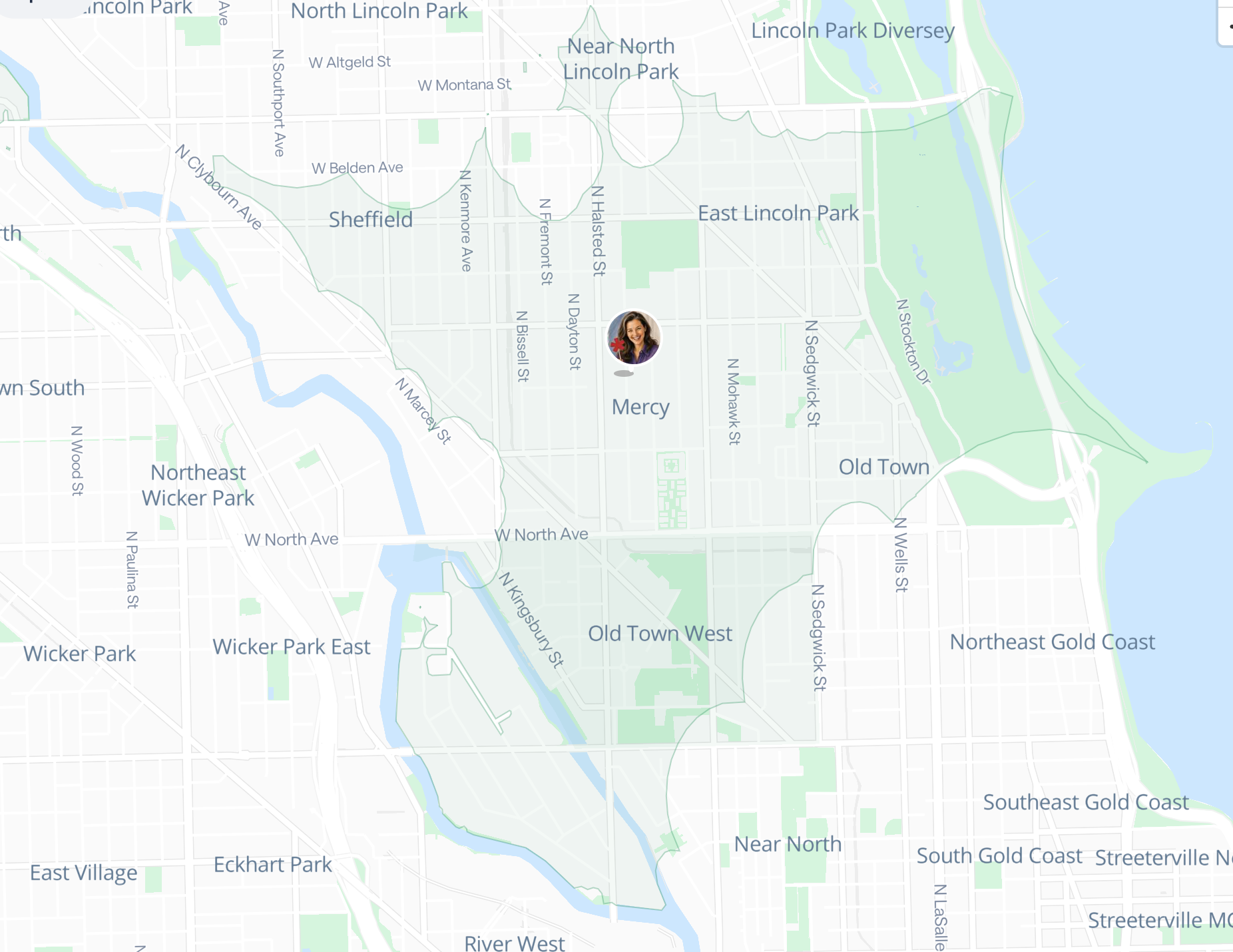
Attempts to trace the perimeter did not improve matters. This was not a problem confined to the western edge. Every side had something to contribute. Between the swoops were points sharp enough to cut newly manicured nails. Members were advised not to enlarge the map immediately after a salon appointment.
Then there were the numbers.
Ashley’s South Lincoln Park screen showed 3,728 neighbors. The public page for ‘Mercy’ announced 36,827 residents and described the place as a “small, quiet neighborhood.” That is an impressively quiet group for one nobody at lunch had heard of.
North Lincoln Park had its own 6,241 residents. Neighbors here, residents there, tens of thousands behind a name nobody recognized. Ashley had opened a neighborhood app, not volunteered to reconcile its accounts.
The page also establishes that residents enjoy dogs, yoga and home improvement, leaving the Society unable to distinguish them from everyone else on the map.
Two explanations remain under consideration: an underlying computer glitch, or a politician attempting a little recreational gerrymandering of the 43rd Ward with the trackpad sensitivity set far too high. Either way, the result should not be allowed near a zoning meeting unsupervised.
Ashley has retained the screenshots. Each attempt to clarify one detail seems to produce another: a missing name, an unexplained population, a piece of Goose Island quietly left outside. The app is remarkably insistent for something that cannot agree with its own heading.
The Society is not asking for much. Just a neighborhood name somebody recognizes, numbers that introduce themselves properly, and a boundary that doesn’t look like it cut up your fresh new manicure.